
Hybrid Live Coding: Designing Systems for Audiovisual Performance
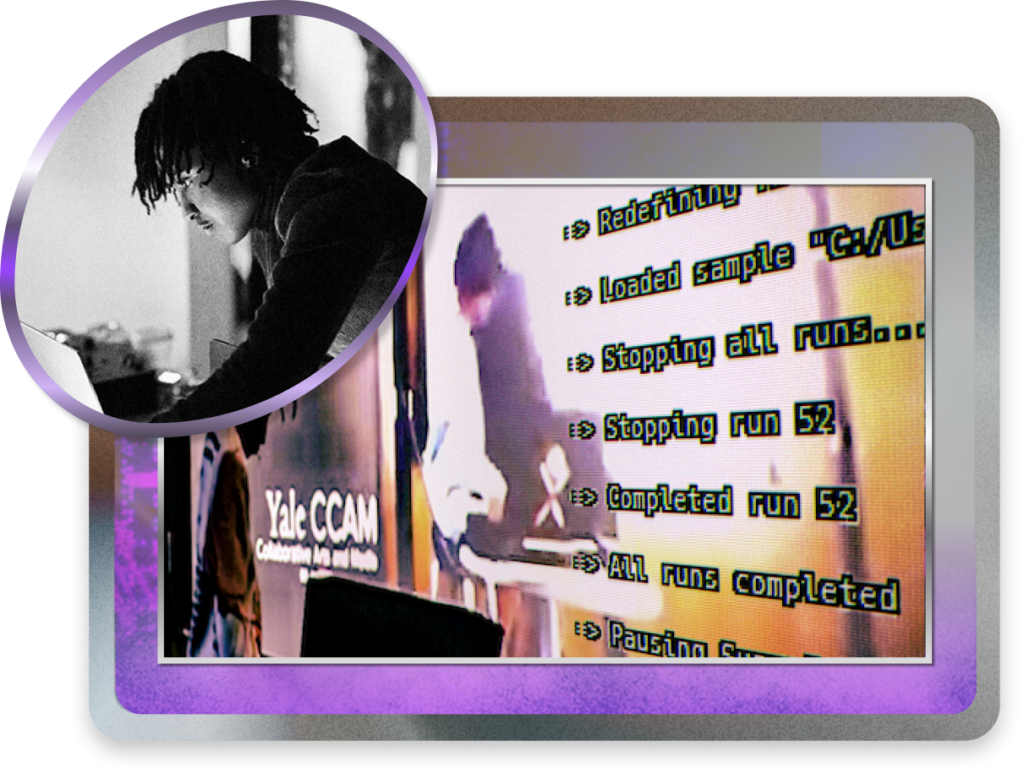
Live coding turns programming into a creative instrument. Instead of writing code privately and executing it later, artists write and modify code in real time to generate music, visuals, and interactive systems during performance.
This 10-week intensive introduces live coding as a tool for building hybrid performance systems that connect code with music technology and digital media tools. Students will learn how to create algorithmic compositions, design generative audiovisual systems, and connect software environments using protocols such as MIDI and OSC.
Throughout the course, participants will develop weekly sketches that explore rhythm, pattern generation, improvisation, and system design. The class will also examine how live coding interacts with other creative tools including DAWs, MIDI controllers, and visual environments.
By the end of the course, students will design a hybrid live coding setup capable of generating real-time sound, visuals, or data-driven performance systems, along with a workflow for documenting and evolving their projects.
Course Logistics
Enrollment Deadline: July 1, 2026
Dates:
Every Wednesday
July 8 – September 9, 2026
Times:
4 – 7 PM PT / 7 – 10 PM ET
Location: Online
Cost:
- $1500 for Live Online Access.
- $750 For Audit Access (weekly recording access, released after each session)
- Payment plans available: 3 monthly installments. Email [email protected] for more information.
Scholarship: We also offer Diversity Scholarships.
Apply by June 24, 2026. Scholarship notifications will be sent within 1 week after the deadline.
Experience Level: Intermediate (Beginner-friendly for participants with programming or music production experience)
Requirements:
• Bring a Mac or PC laptop
• Install Sonic Pi (free) or use the browser-based Strudel environment
• Optional: MIDI controller or small music hardware device
Prerequisites:
Participants should have some familiarity with at least one of the following:
• Basic programming concepts
• Music production software (DAWs such as Ableton Live)
• Creative coding tools
• Digital media art workflows
Prior live coding experience is not required, but comfort working with computers and creative software is recommended.
Additional Information:
• No Refunds or Exchanges.
• View our FAQ here.
• Contact [email protected] with any questions.
Educational Goals:
Participants will:
• Learn the fundamentals of live coding for music and audiovisual creation
• Build generative sketches using algorithmic composition techniques
• Connect live coding tools with external software and hardware via MIDI and OSC
• Design hybrid systems that combine code, music technology, and visual tools
• Develop improvisational strategies for performing with code
• Produce a final hybrid live coding performance system
Course Outline
- Week 1: Introduction to Live Coding and Real-Time Systems
Overview of live coding as a creative practice and performance paradigm.
Introduction to core environments (Sonic Pi / Strudel).
Setting up a live coding workflow and building a first generative sketch. - Week 2: Patterns, Timing, and Algorithmic Composition
Working with rhythmic structures, pattern systems, and algorithmic sequencing.
Understanding timing systems for real-time audio and event scheduling. - Week 3: Connecting Creative Systems (MIDI + OSC)
Introduction to communication protocols for creative tools.
Sending and receiving data between live coding environments and other software. - Week 4: Integrating Music Technology
Building hybrid performance setups using DAWs, drum machines, synthesizers, and MIDI controllers.
Mapping parameters and designing signal flow between tools. - Week 5: Audiovisual Systems and Real-Time Visuals
Exploring audiovisual performance systems.
Connecting live coded audio to visual environments (e.g., TouchDesigner, browser-based tools). - Week 6: Improvisation and Performance Practice
Strategies for improvising with code.
Managing mistakes, uncertainty, and responsiveness in live performance contexts. - Week 7: Designing Live Coding Instruments
Creating reusable systems for performance.
Modularity, abstraction, and designing flexible coding frameworks. - Week 8: Documentation and Code Retrieval
Strategies for recording, versioning, and archiving live coding work.
Methods for documenting performances and reconstructing systems. - Week 9: Project Development and Critique
Students refine their hybrid live coding systems.
Peer feedback and troubleshooting of performance setups. - Week 10: Final Presentations and Discussion
Participants present a live coding performance study or hybrid system.
Discussion of future directions, resources, and communities in live coding practice.
About Technologies:
The course will introduce several technologies used in contemporary live coding and digital performance:
Sonic Pi — an open-source live coding environment designed for creating music in real time using a Ruby-based syntax.
Strudel — a browser-based live coding environment inspired by TidalCycles that enables algorithmic pattern creation and real-time musical control.
Hydra — a browser-based live coding environment for real-time visuals.
Max/MSP — a visual programming environment used to build interactive audio systems and connect hardware devices.
TouchDesigner — a node-based platform for real-time visuals and generative media often used in audiovisual performance and installations.
Students will also learn how to use MIDI and OSC (Open Sound Control) to connect live coding systems to controllers, synthesizers, DAWs such as Ableton Live, and visual tools.
Become a Gray Area Member for early access to our workshops and courses, and up to 20% off.
Gray Area Members enjoy extraordinary access to our interdisciplinary arts & education programs, while supporting our mission to catalyze creative action for social transformation. Get free admission, exclusive content, and more!
