
Cybersentics Book Club
April 2026: Sentics — A Predecessor of Affective Computing?
What if emotions have a universal physical language — one that can be measured, transmitted, and felt across bodies and cultures? In 1976, musician and neuroscientist Manfred Clynes proposed exactly that, arguing that each emotion is expressed through a precise, biologically programmed dynamic form he called a "sentic shape."
Cybersentics Book Club
Meeting 6:
Sunday, April 19, 2026
12:00 – 2:00 PM
All ages welcome. A high school reading level or above is recommended.
Hosted upstairs in the Gray Area Incubator, not wheelchair or mobility accessible
View our FAQ page for more info, or contact us at [email protected] with any accommodation requests.

Sypnosis
Join us this April at Gray Area's Cybernetics Book Club.
This month, Cybersentics Book Club discusses the idea that emotions have fixed, measurable shapes that transcend culture and can be induced through touch alone. Though contested, Clyne's theory of sentic shapes casts a long shadow, most notably informing Rosalind Picard's work on affective computing.
About the Cybersentics Book Club
Gray Area is pleased to host a new reading group, the Cybersentics Book Club that will explore the human sensorium through the lens of art and technology.
In the first cycle, Cybersentic's reading list will center key themes related to the bidirectional flow of information between bodies and the environment. The outward perspective examines biofeedback, while the inward perspective focuses on cyborg art.
This book club is a fit for artists, makers, researchers, scholars, engineers, and anyone curious about the integration of technology and art. Join us as we investigate how to enhance our sensory experiences, from biofeedback and sonification to embedding sensors that challenge our perceptions.
Our group's purpose is to cultivate a welcoming community that fosters knowledge-sharing and collaboration. Whether you're seeking to connect with potential collaborators, look for answers to pressing questions, gain critical insights, or engage in peer learning, this is the place for you!
Cybersentics is organized and led by Gray Area Research Fellow Anastasia Chernysheva as part of the Biofeedback Art|Research Network (BARN).
An open-access library that accompanies this book club can be accessed here.
About the Host
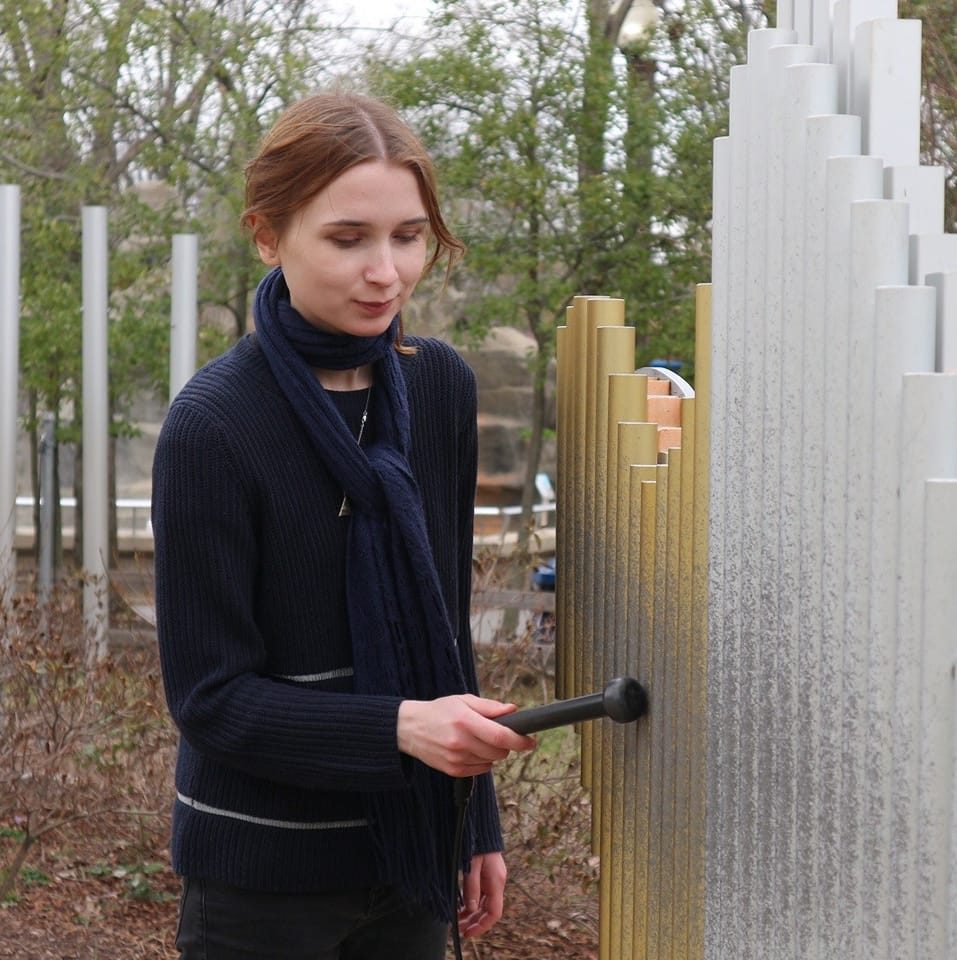
Anastasia Chernysheva
I’m a scholar and curator exploring topics of experimental music and biofeedback art. As a scholar, I gave invited lectures at the UCLA Department of Art (Art|Sci Center), UCLA School of Theater, Film and Television, and presented at the NIME2024 Colloquium. As a curator, I produced many events —ranging from music performances to science talks — at the University of Illinois, Santa Monica College, and Bergamot Station Art Center that were supported through grants from the Center for Advanced Study (CAS) at the University of Illinois Urbana-Champaign and Santa Monica Cultural Affairs. In 2024, I founded the Biofeedback Art|Research Network — an international community of artists, researchers, and scholars dedicated to exploring work related to biofeedback. Within about a year of the Network's existence, I organized seven events featuring its members, including symposia, screenings, performances, and workshops at the Lois Lambert Gallery (Los Angeles), Indexical (Santa Cruz), and Gray Area (San Francisco). Currently, I’m a Visiting Researcher at the UCLA Music Industry Program and a Research Fellow at Gray Area.
About the Author
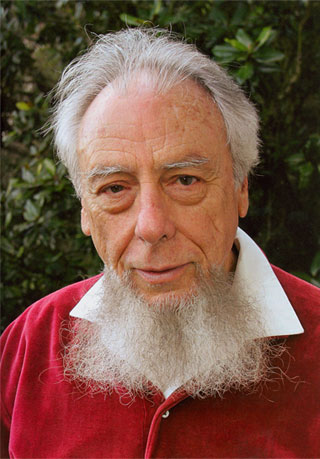
Manfred Clynes (1925-2020) was an Austrian-born pianist, neuroscientist, and inventor whose work spanned music, engineering, and neurophysiology — trained at both the University of Melbourne and the Juilliard School. While serving as chief research scientist at Rockland State Hospital, he coined the term "cyborg" with psychiatrist Nathan S. Kline in their 1960 paper "Cyborgs and Space," published in Astronautics, proposing that humans could be physiologically adapted for space travel through machine integration. Later, as a visiting professor at the University of California, San Diego, he developed the speculative theory of sentic shapes — that each emotion is encoded in a universal, biologically fixed time-form expressible through touch — a framework that, though contested, anticipated Rosalind Picard's foundational work on affective computing at MIT in the 1990s.

Become a Gray Area Member
As a Gray Area Member you get special access to events, behind-the-scenes content and more. Gray Area is a dedicated family of supporters who believe in the power of creative action to catalyze social transformation. Join as a member today to provide sustaining support for our globally unique arts, education, research, and incubation programs.
