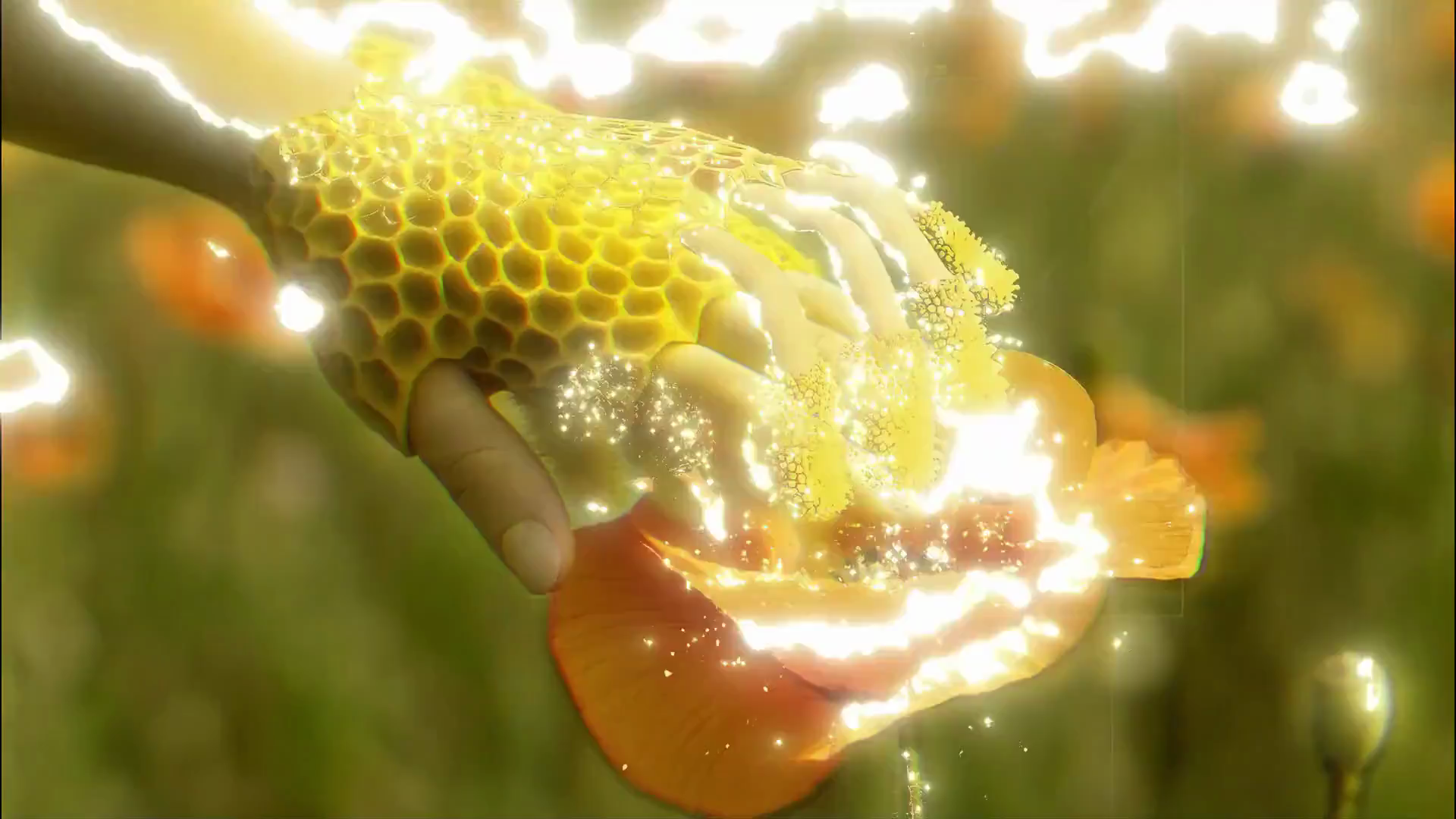
The Department of Species Services, or DSS for short, is an interactive exhibit that materializes an imagined unemployment office in a speculative future. In this alternative scenario, set in the year 2035, DSS has been established as the first artificial intelligence-led non-governmental organization in the United States. The Department’s mission is to monitor ecosystems, design interspecies support infrastructure, and pioneer new forms of post-anthropocentric labor. Embracing a planetary systems perspective, the DSS considers all living things, human and non-human alike, as interconnected participants in a shared biosphere. Through the DSS, humans in this future world may apply for newly defined ecological roles. Instead of serving corporate or even government entities, workers labor in service of other species and biomes: from bees, to rivers and forests, to invisible, microbial communities.
One such speculative job scenario comes to life in the Gray Area Gallery: the Human Pollinator.
In the artists’ fictional narrative, a sudden and unexplained decline in bee populations across California creates a devastating disruption in the reproductive cycles of the California poppy flower. The California poppy, or Eschscholzia californica, is a keystone species that supports a wide diversity of wildlife on the West Coast in addition to maintaining soil stability. In response to this crisis, the California division of the Department of Species Services initiates an emergency recruitment campaign to hire new human pollinators to restore the ecological balance.
As new recruits, viewers are equipped with a specially-designed and 3D-printed Pollination Glove, which augments human touch to achieve maximum cross-pollination efficiency. Visitors are invited to don the glove and step into the role of human pollinator: haptic feedback within the glove responds to motion, simultaneously triggering spatialized sound within a constructed sculptural environment. A dual-channel projection spans two walls, juxtaposing the rendered perspective of the honey bee with a live camera feed embedded within the Pollination Glove. Within this environment, the performative gesture of pollination becomes an embodied mode of ecological thinking that fosters empathy between human, machine, animal, and plant.
This exhibition is presented at a moment of unprecedented growth, widespread adoption, and unchecked use of artificial intelligence. AI tools are now implemented in consumer-facing products across industries, and have become daily processes for computer users globally. More alarmingly, agentic systems, intelligent software protocols that delegate decision-making to machine actors, are beginning to be deployed at enterprise scale. Compounding the generalized environmental anxiety that AI has produced, this exhibit is set against a backdrop of widespread tech layoffs and white collar job instability.
From these murky waters, The Department of Species Services floats a new way to consider the role of AI in our lives and ecosystems. In this speculative framework, machine and human labor take on new urgency and have been reoriented towards sustainable ecological futures. Instead, AI has been refigured as a planetary technology for care and reciprocity, a force that molds our world in favor of coexistence over extinction.