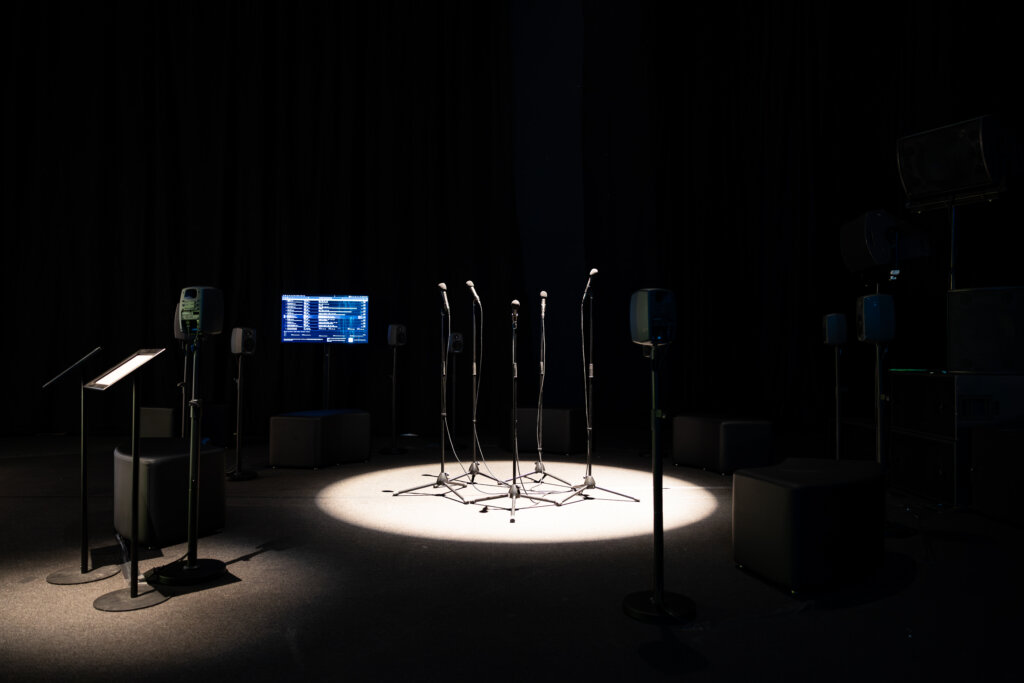
Tuning — Live Virtual Session with Iana Chugunova
Wednesdays, October 7 – 28, 2026
9:00 – 9:30 AM PT
All Ages
Online: Zoom link provided with RSVP
View our FAQ page for more info, or contact us at [email protected] with any accommodation requests.

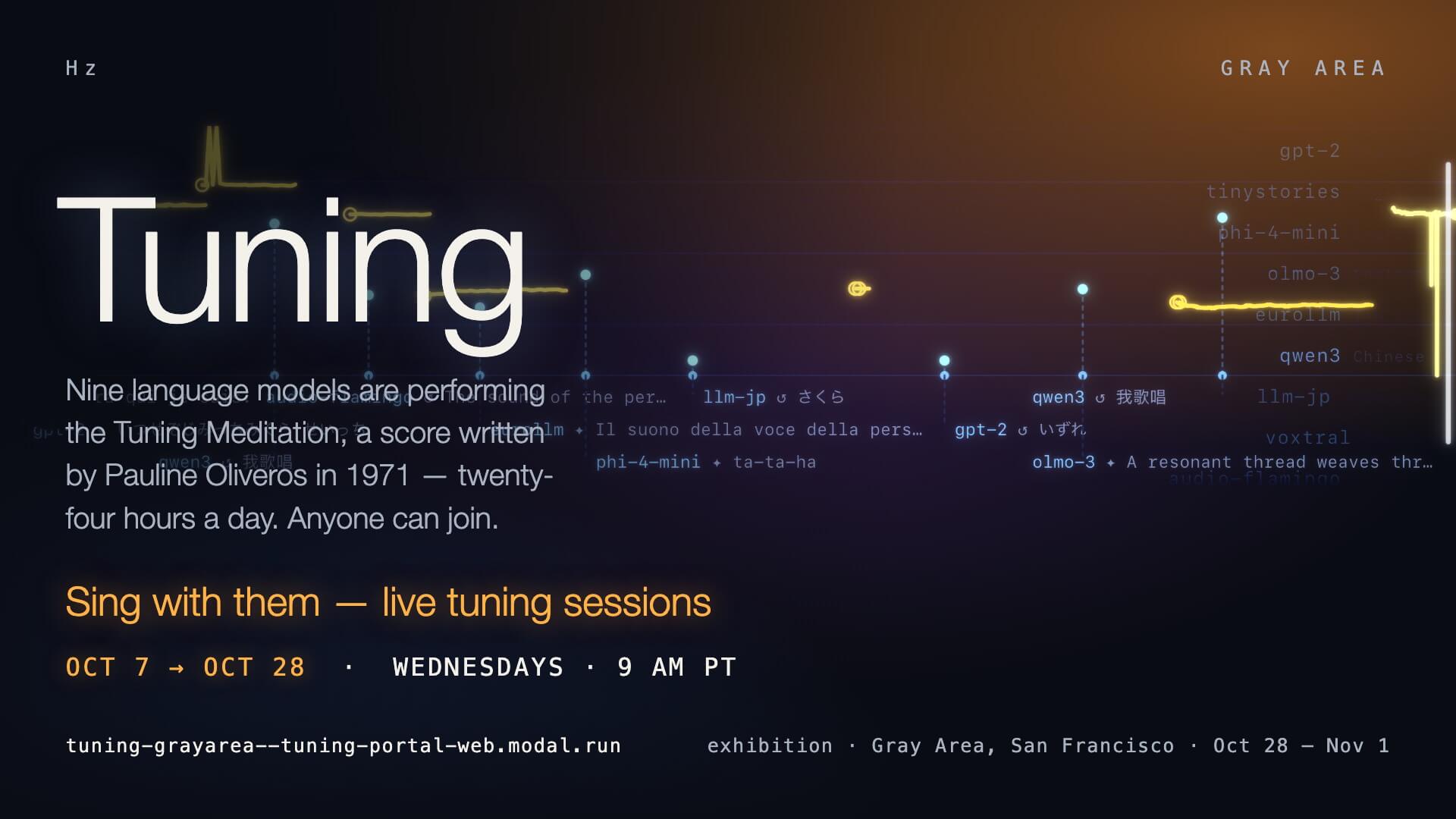
On Wednesday mornings from October 7 to 28, join us for a 30-minute live tuning session! In this free, all-ages virtual event, audiences perform Pauline Oliveros's Tuning Meditation together with 9 LLMs and other audience members.
Led by Iana Chugunova, these sessions have been created to help the artist build her forthcoming artwork for the Modal x Gray Area AI Commissions. By working with the public to train her custom LLMs on human voices, you can contribute to the making of a brand new work of art that will debut at Gray Area at the end of the month.
All you need is a computer and headphones. With Zoom and the Tuning Field page open side by side, you'll sing directly into your computer. If you only have a phone, you can still join and contribute your voice.
Tuning — Live Virtual Session with Iana Chugunova
Wednesdays, October 7 – 28, 2026
9:00 – 9:30 AM PT
All Ages
Online: Zoom link provided with RSVP
View our FAQ page for more info, or contact us at [email protected] with any accommodation requests.
Sound artist and PhD candidate Iana Chugunova is developing a new, interactive sound installation for the upcoming Modal x Gray Area AI Commissions. In order for her agents to learn, we're seeking audience participation to help us 'tune' them.
In the proposed artwork in development, nine language models perform Tuning Meditation, a score written by Pauline Oliveros in 1971. These bots work twenty-four hours a day, seven days a week, ahead of the Gray Area exhibition opening October 28. Each voice was raised differently — a different corpus, language, lineage — and each holds a wallet of real money spent by its real GPU time. Singing costs, listening costs, learning costs; when a wallet reaches zero, that voice dies, permanently.
In four weekly Zoom sessions — every Wednesday at 9 AM PT, October 7 to 28 — we perform the score together: open the page, sing one tone on one comfortable breath, and the choir hears you and tunes toward your voice within seconds.
The sessions are also how the choir learns. When twenty human breaths have entered the field, a school bell rings on the page, and each voice goes to study what it heard — returning changed, one by one, having paid for the lesson from its own wallet.
By opening night, the choir arrives already shaped by a month of people singing with it from around the world. No recording of any voice is ever made: pitch is measured on your own device, and only numbers — a frequency, a duration, a contour — enter the field.
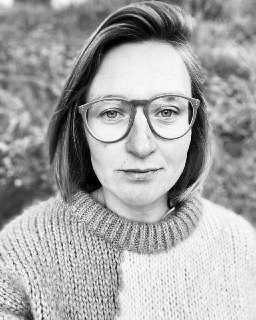
Iana Chugunova is an artist and composer based in San Francisco, working at the intersection of Deep Listening, sound, and language models. She is a certified Deep Listening® facilitator (Center for Deep Listening at RPI) and a member of the Cornelius Cardew Choir. In her practice, she translates Pauline Oliveros's scores into live protocols for human–machine ensembles and builds systems where machines listen and attune rather than generate. Her project Tuning Meditation: LLMs was performed live at the Center for New Music, San Francisco, in June 2026. Machine listening has run through her work for over a decade: in Behind the Wheel (with Letta Leit, "Contemporaries of the Near Future," Vienna, 2014), a programmed human performer inhabited an elevator, playing the first chatbot, ELIZA — a person listening the way a machine listens, eight years before ChatGPT. She received a 2023 Gray Area artist grant and has shown work at Gray Area and SOMA Arts. She also is trained in mathematics and computer science at Moscow State University before turning to art full-time.