TRANSFER Data Trust
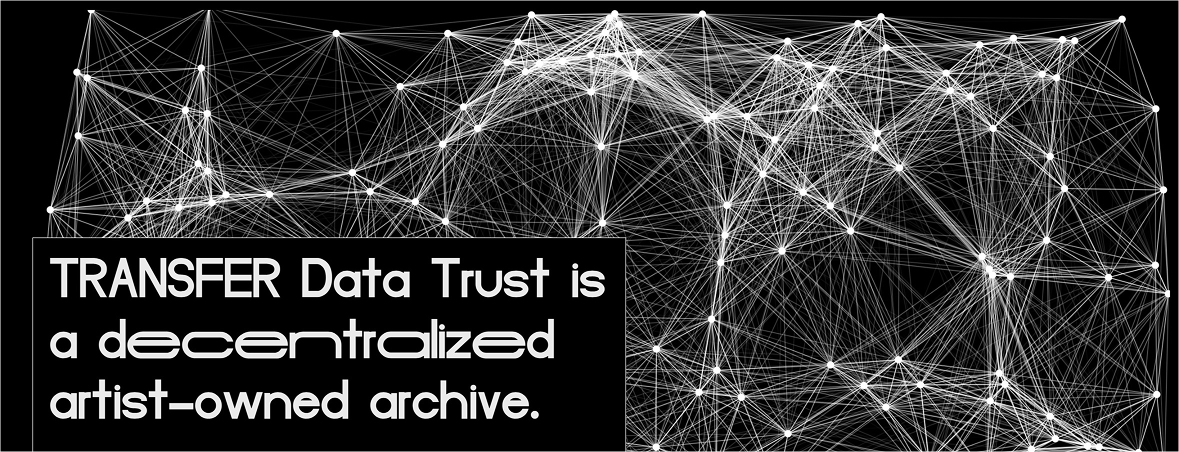
TRANSFER Data Trust is a decentralized artist-owned archive and cooperative value exchange network.
TRANSFER's mission is to cooperatively maintain artworks in perpetuity, ensuring their preservation and access across generations. TRANSFER manages and grows the value of digital assets by leveraging decentralized storage and encryption. Backed by a network of care, TRANSFER's model offers a new approach to media art valuation, conservation and governance.
ARTIST-OWNED ARCHIVE & CATALOG
TRANSFER Data Trust stewards artworks committed by our artist members. Many of the works have been placed in collections, and we hold and maintain the artist proofs in trust. Select works are available for acquisition from the artists, and backed by our Conservation Care Team in perpetuity as an added benefit for collectors.
DATA CO-OP GOVERNANCE MODEL
Built on a foundation of more than a decade of mutual support and value exchange, our governance model offers a bold proposition of distributive justice in contemporary art. The model allows artists to own the value of their work and grow the equity of their studio practice through sustainable care.
OPEN CULTURE STACK
Leveraging decentralized storage, our local-first hardware and software infrastructure elegantly weaves together existing open source technology and a patent pending media conservation client. Our resilient peer-to-peer node network is censorship resistant, and free from dependencies on big tech.
In March 2026, two publications emerged from TRANSFER Data Trust’s second round of funding, supported by Filecoin Foundation for the Decentralized Web (FFDW), Filecoin Foundation, GSR Foundation, and Gray Area. They document the practical, on-the-ground work of pairing artists with conservators and developing a semantic metadata framework that extends existing cultural heritage standards for time-based media art.
These foundational research documents show that the Data Trust is operational infrastructure, producing original scholarship that advances the broader field of time-based media preservation for virtual and generative art.
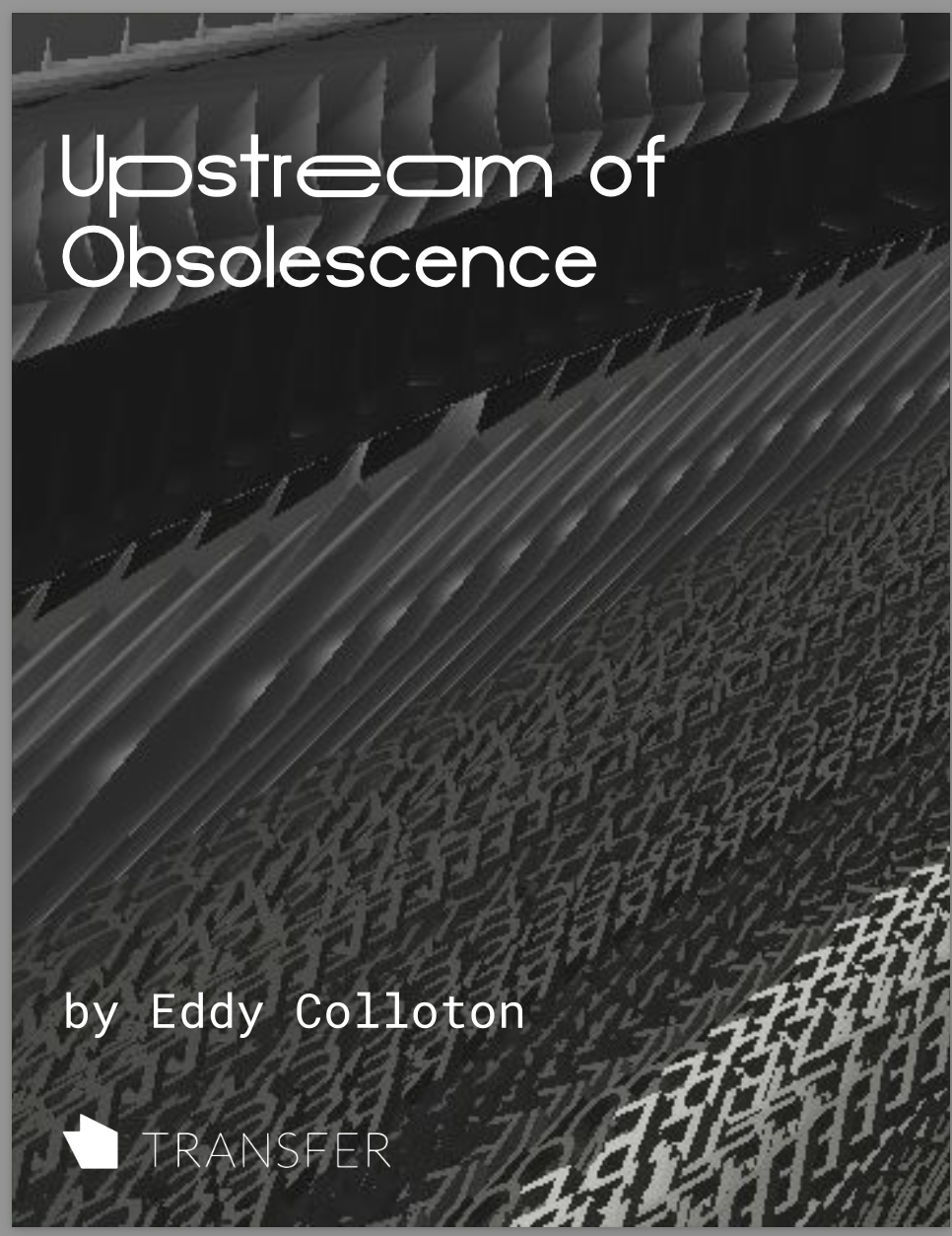
Upstream of Obsolescence
by Eddy Colloton
This essay documents the strategy and outcomes of TRANSFER’s conservation Care Team. It
introduces the concept of conservation “upstream” from the museum—working directly with artists in their studios before works enter institutional collections—and presents five detailed case studies showing why this approach is urgently needed. The essay traces how platforms disappear, companies restructure, and works that are only a few years old face insurmountable technical barriers.
The project was led by Kelani Nichole, TRANSFER Founder, alongside Regina Harsanyi, Associate Curator of Media Arts at Museum of the Moving Image and Preventive Conservator, who has led conservation frameworks for the project since its inception. The Care Team was composed of time-based media conservation specialists Eddy Colloton, sasha arden, Claudia Röck, Nicholas Kaplan, and Taylor Healy.
Artist–Conservator Pairings:
Eva Papamargariti — Claudia Röck
Lorna Mills — Eddy Colloton
Carla Gannis — sasha arden
Huntrezz Janos — Nick Kaplan
Rosa Menkman — Taylor Healy
Author Bio:
Eddy Colloton is a media conservator and consultant working with art museums to
preserve time-based media artworks since 2011. He received his MA from NYU’s Moving Image
Archiving and Preservation program and has previously worked as Project Conservator of Time-
Based Media for the Hirshhorn Museum and Sculpture Garden, Assistant Conservator at the
Denver Art Museum, and Time-Based Media Technician at LACMA.
Linked Art and Related Standards for Time-Based Media Descriptive Metadata
by Rae Egan
This 38-page technical report, produced by ontology and data modelling specialist Rae Egan, examines the alignment between the Linked Art Data Model and the descriptive metadata requirements for documenting time-based media artworks within TRANSFER’s decentralized archive. It is a rigorous analysis of how existing cultural heritage metadata standards fall short for time-based media, and proposes concrete extensions to address those gaps.
Partners