
Cybersentics Book Club
June 2026: Where the Turtles End
Explore a study of a 1960 experimental computing device that probes the tensions between consciousness, embodiment, and control in the history of computation.
Cybersentics Book Club
Meeting 8:
Sunday, June 21, 2026
12:00 – 2:00 PM
All ages welcome. A high school reading level or above is recommended.
Hosted upstairs in the Gray Area Incubator, not wheelchair or mobility accessible
View our FAQ page for more info, or contact us at [email protected] with any accommodation requests.
This Month's Reading:
Hamilton, K. (2017). Where the Turtles End. Contemporary Arts and Cultures.
About the Cybersentics Book Club
Gray Area is pleased to host a new reading group, the Cybersentics Book Club that will explore the human sensorium through the lens of art and technology.
In the first cycle, Cybersentic's reading list will center key themes related to the bidirectional flow of information between bodies and the environment. The outward perspective examines biofeedback, while the inward perspective focuses on cyborg art.
This book club is a fit for artists, makers, researchers, scholars, engineers, and anyone curious about the integration of technology and art. Join us as we investigate how to enhance our sensory experiences, from biofeedback and sonification to embedding sensors that challenge our perceptions.
Our group's purpose is to cultivate a welcoming community that fosters knowledge-sharing and collaboration. Whether you're seeking to connect with potential collaborators, look for answers to pressing questions, gain critical insights, or engage in peer learning, this is the place for you!
Cybersentics is organized and led by Gray Area Research Fellow Anastasia Chernysheva as part of the Biofeedback Art|Research Network (BARN).
An open-access library that accompanies this book club can be accessed here.
Sypnosis
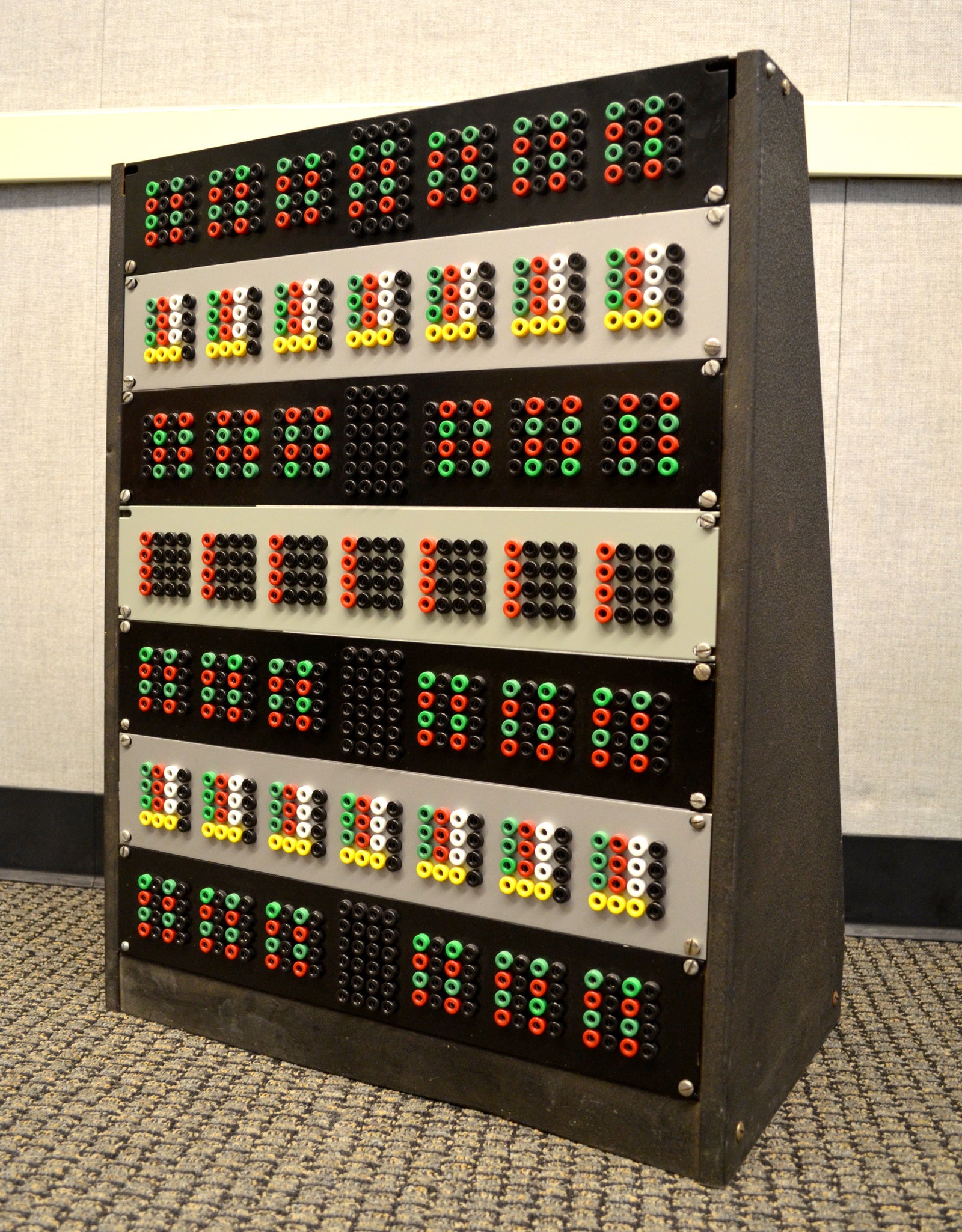
This edition of the book club comes with a Midwestern flavor! In the article on our table, "Where the Turtles End," Kevin Hamilton examines the Adaptive Reorganizing Automaton (ARA), an experimental device developed at the University of Illinois Biological Computer Laboratory (BCL) in 1960, tracing how competing approaches to materiality in the history of computation illuminate a persistent tension between consciousness, embodiment, and control.
Did you know that a small university town amid cornfields (Urbana) has been the home of second-order cybernetics, early computing, the first algorithmic music, the Mosaic graphical web browser, and so much more? Now you do — and there's more to that story.
For this meeting, we are trying something new: the session will be held in a hybrid format, welcoming participants from outside the Bay Area to join us online. We are also hosting the article's author, Kevin Hamilton, who will join us virtually as our first guest speaker.
About the Host
Anastasia Chernysheva
Anastasia Chernysheva is a scholar and curator specializing in the cultural reception of neurotechnology and the mediation of knowledge about the brain and mental life through art. To learn more, check out Cybersentics Book Club and Library at Gray Area.
About the Author

Kevin Hamilton is a scholar, artist, and academic leader whose interdisciplinary work explores how media, technology, and cultural infrastructures shape public life and human flourishing. Based at the University of Illinois Urbana-Champaign, where he serves as Associate Vice Chancellor for Research and Innovation for Humanities, Arts, and Related Fields, he previously served as Dean of the College of Fine and Applied Arts. His research spans Cold War visual culture, algorithmic accountability, cybernetics, and digital media ethics, with publications across media studies, communication, and art theory, including Lookout America! The Secret Hollywood Film Studio at the Heart of the Cold War (2019), co-authored with Ned O’Gorman. Hamilton has also contributed significantly to scholarly publishing and interdisciplinary research communities through roles with MIT Press, the New Media Caucus, and arts-integrative research initiatives. Trained at RISD and MIT, he has combined creative practice, scholarship, and institutional leadership throughout his career.
Currently, Kevin serves as an Editor-in-Chief for Leonardo Books at MIT Press.
Partner

Leonardo
Fearlessly pioneering since 1968, Leonardo serves as THE community forging a transdisciplinary network to convene, research, collaborate, and disseminate best practices at the nexus of arts, science and technology worldwide. Leonardo’ serves a network of transdisciplinary scholars, artists, scientists, technologists and thinkers, who experiment with cutting-edge, new approaches, practices, systems and solutions to tackle the most complex challenges facing humanity today. As a not-for-profit 501(c)3 enterprising think tank, Leonardo offers a global platform for creative exploration and collaboration reaching tens of thousands of people across 135 countries. Our flagship publication, Leonardo, the world’s leading scholarly journal on transdisciplinary art, anchors a robust publishing partnership with MIT Press; our partnership with ASU infuses educational innovation with digital art and media for lifelong learning; our creative programs span thought-provoking events, exhibits, residencies and fellowships, scholarship and social enterprise ventures.
Become a Gray Area Member
As a Gray Area Member you get special access to events, behind-the-scenes content and more. Gray Area is a dedicated family of supporters who believe in the power of creative action to catalyze social transformation. Join as a member today to provide sustaining support for our globally unique arts, education, research, and incubation programs.
